
QI connects educators across continents to explore our use of AI in Higher Education.
16 September 2026 I The Queensland Institute
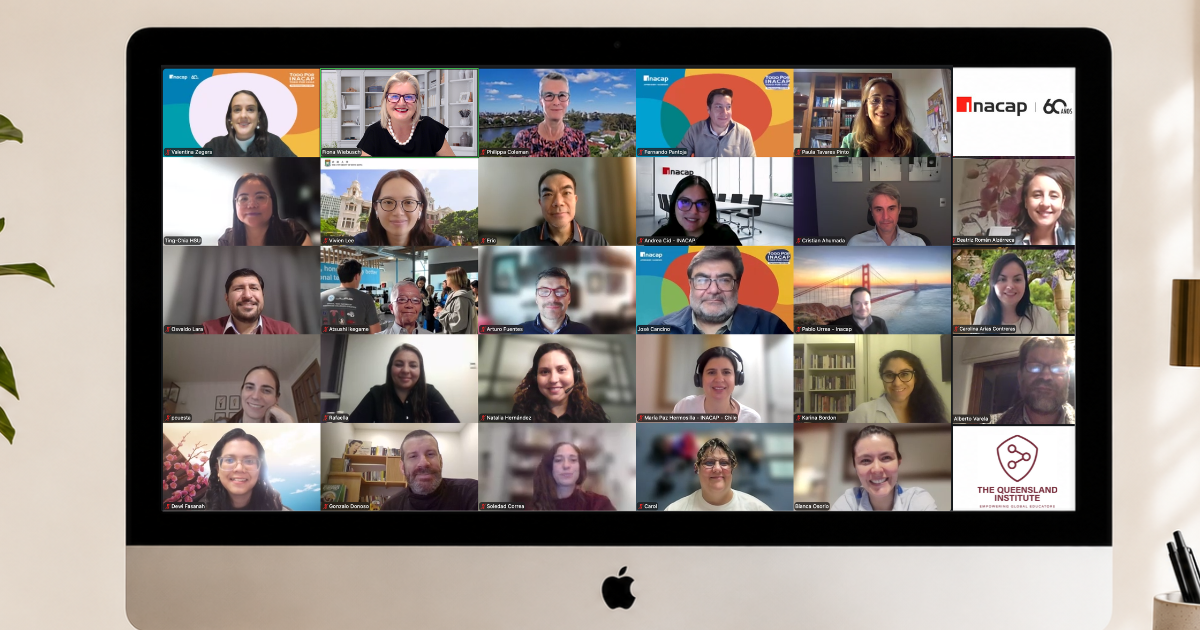
Colleagues gather across continents to discuss institutional approaches to AI.
Artificial intelligence is moving quickly, but education’s response is not a race.
Across our conversations with education partners this year, we have heard a consistent message:
We are working hard to navigate AI ethically and effectively.
Educators and institutions are at different stages, from observing developments and testing tools to creating guidelines and embedding AI across curricula. For colleagues working in multilingual contexts, generative AI also offers significant practical benefits, helping them translate and adapt materials, explain discipline-specific language and make learning more accessible.
Yet these opportunities come with important questions. We have been impressed by the care with which colleagues are balancing enthusiasm for AI with a strong commitment to ethical practice and support for educators and learners.
This shared need to explore rapid change thoughtfully led INACAP to approach The Queensland Institute to co-design the inaugural:
AI Global Dialogues in Teaching, Learning and Leadership in Higher Education and Vocational Education and Training (VET).
Together, we created a space where educators can step outside their own contexts, learn from colleagues around the world and speak honestly about the questions they are still navigating.
Why dialogue matters
Many AI workshops and webinars focus on a particular tool, institution or national context. The AI Global Dialogues were designed differently.
Across three sessions, speakers and participants from the QI community in Latin America and the Asia-Pacific explore institutional leadership, teaching practice, and learning and assessment through short presentations and facilitated small-group conversations.
Dialogue is central. Speakers share expertise and real examples, while participants contribute their own experiences, questions and perspectives. A policy developed in Brazil, a curriculum initiative in Taiwan or an application created by a lecturer in Hong Kong can inspire new possibilities in very different contexts.
“It was absolutely amazing! So nice to interact with people having similar issues, or different ones that others could answer or explain.”
Participant, Australia
Beginning with institutional leadership
Our first dialogue, held in August, welcomed 28 colleagues from eight higher education institutions across seven countries and regions.
Our speakers were Professor Paula Pinto, General Coordinator of the UNESP Language Program at São Paulo State University in Brazil, and Professor Ting-Chia Hsu, Distinguished Professor of Computer Science and E-Learning at National Taiwan Normal University in Taiwan.
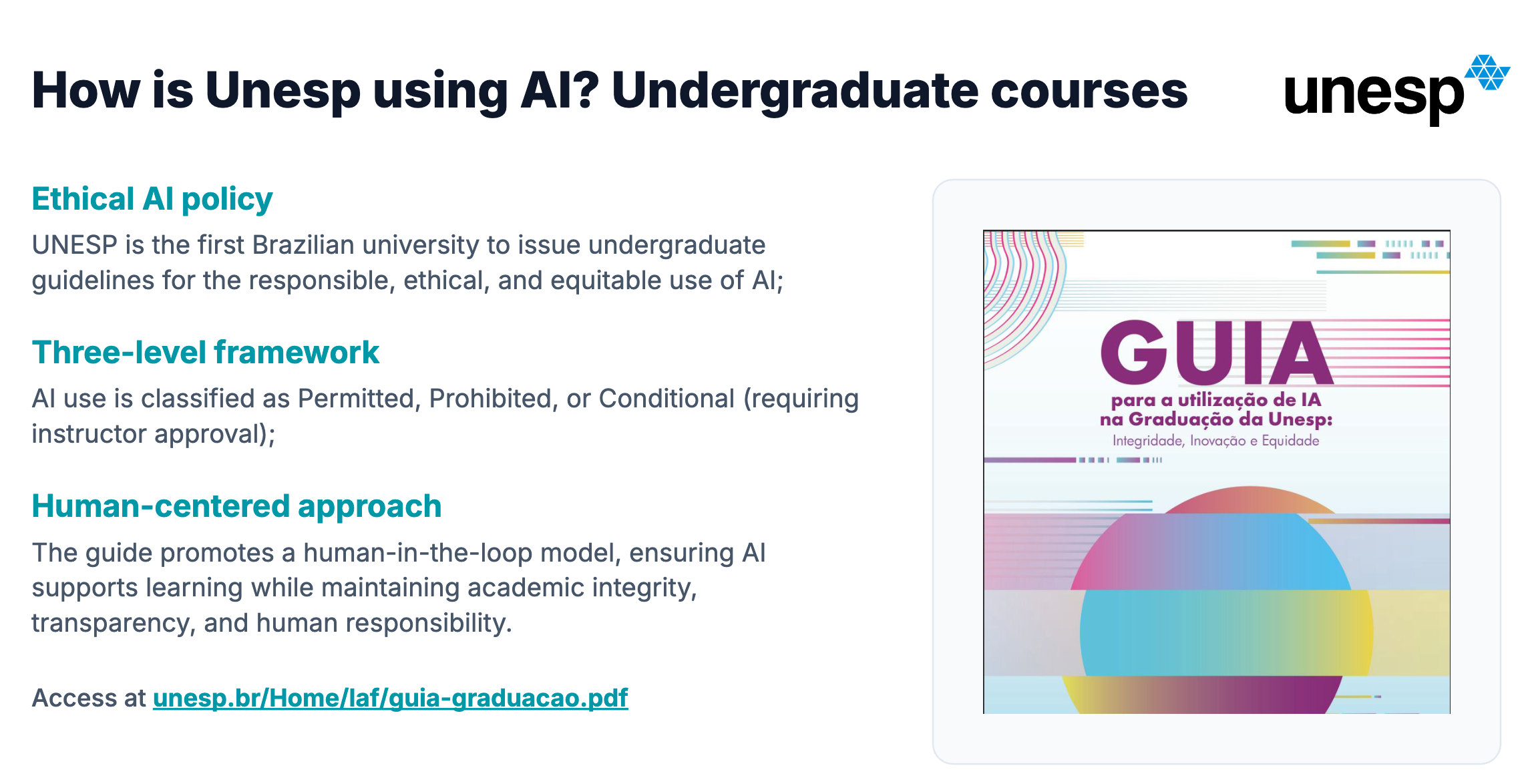
Professor Pinto shared how UNESP became the first Brazilian university to issue undergraduate guidelines for the responsible, ethical and equitable use of AI. Its framework classifies AI use as permitted, prohibited or conditional, with transparency, academic integrity and human responsibility at its centre.
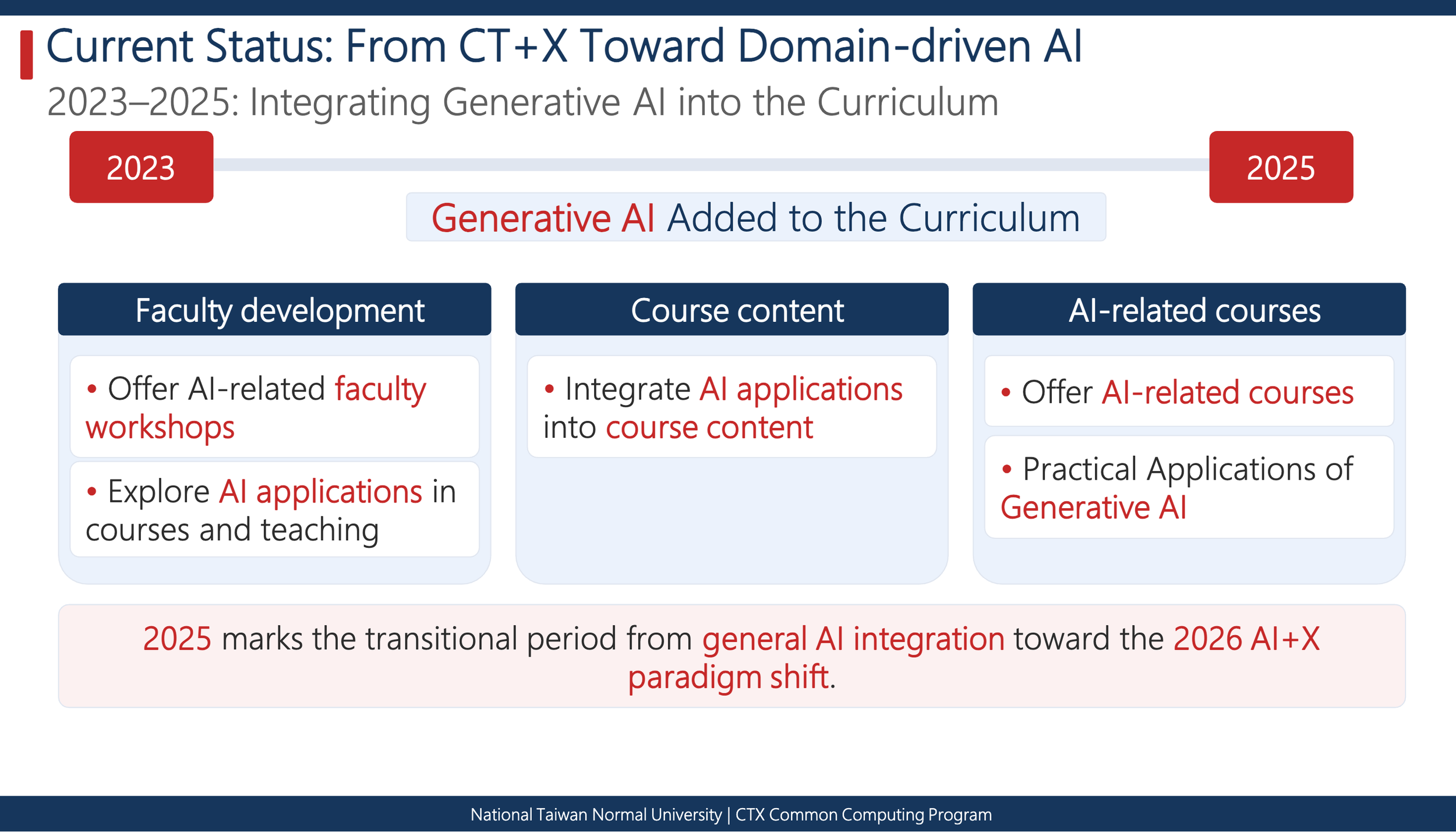
Professor Hsu described NTNU’s move towards a domain-driven approach, supported by faculty development, curriculum content and dedicated AI-related courses.
Together, their examples showed that responsible AI leadership extends beyond selecting tools. It requires policy, professional learning, curriculum planning and careful consideration of the human capabilities education must continue to develop.
“AI is such a huge topic and changing rapidly. It often feels overwhelming: where and how to start! I was inspired to hear from colleagues in the tertiary sector who are tackling the impacts of AI head-on.”
Participant, Chile
Bringing the conversation into the classroom
Our second dialogue, held in September, shifted the focus to teaching practice.
QI Co-Founder Fiona Wiebusch began by asking participants to consider where they currently sit across a continuum of four levels of AI capability:
AI Curious > AI Intern > AI Deep Researcher > AI Agents.
Including AI Curious was important. Reading, attending workshops and learning from colleagues are meaningful stages of professional development. Educators should not feel pressured to use every new tool or progress at the same pace as everyone else.
Our featured speakers then demonstrated what thoughtful experimentation can look like in practice.
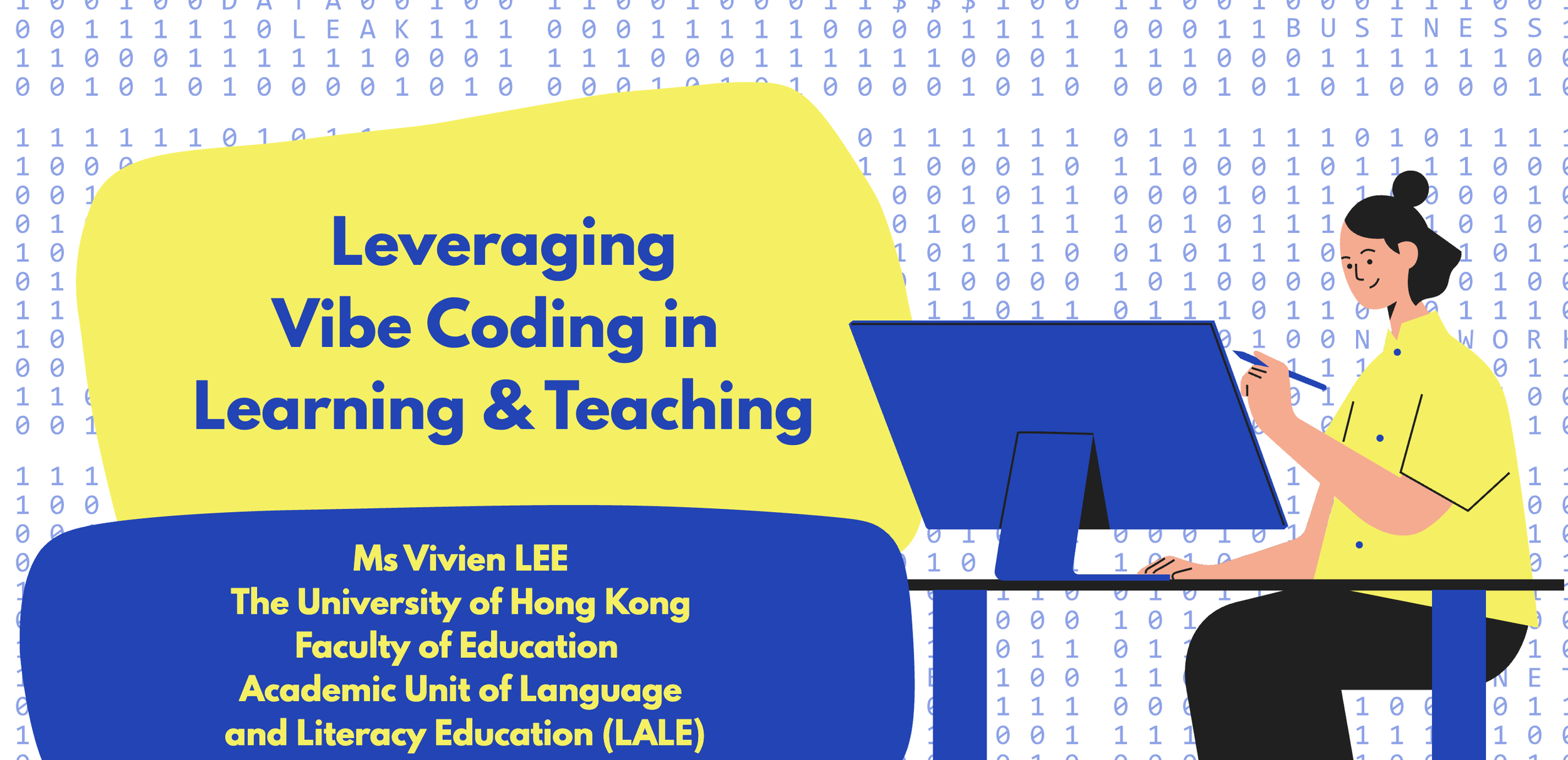
Vivien Lee from The University of Hong Kong shared how she developed a bespoke application through vibe coding, using natural-language prompts to create software in response to the limitations of an existing learning platform. Rather than starting with a tool and searching for a use, Vivien began with a genuine teaching challenge. Her solution created opportunities for greater personalisation and included students in the process.
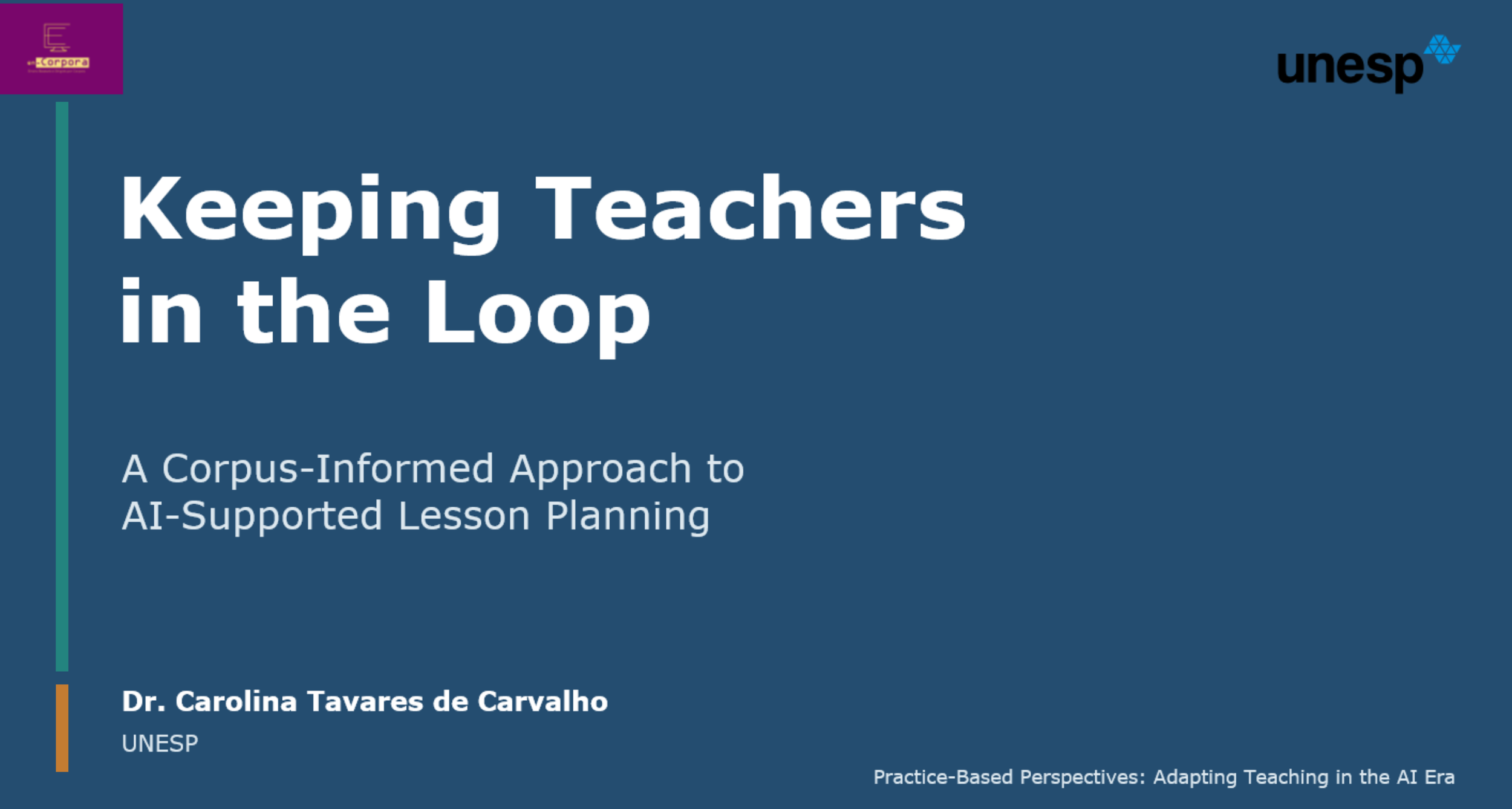
Dr Carolina Tavares de Carvalho from São Paulo State University introduced Keeping Teachers in the Loop, a corpus-informed approach to AI-supported lesson planning. Her framework showed how teacher decisions come before lesson development. AI can support the process, but teachers provide the knowledge of learners, objectives, context and pedagogy that gives the lesson its direction.
Small-group discussions and reflection activities took the conversation in new directions, surfacing practical ideas and shared challenges. Exploring these with colleagues from different disciplines and countries helped participants see familiar challenges from new perspectives.
“Seminars organised by educators are truly special — you created a space that was not only intellectually rich but also deeply interactive and meaningful for all participants. The care and intentionality behind the design of the session shone through in every moment.”
Participant, Hong Kong
Returning to the student experience
Our third and final dialogue in the 2026 series will be held in October. Our focus shifts to the student experience, exploring learning and assessment in the AI Era.
We are honoured to be joined by guest speakers, including Professor María Pilar Cuesta Rodriguez from INACAP in Chile and Dewi Fasanah, a Master of Communications student at The University of Queensland in Australia.
Having considered institutional leadership and teaching practice, it is fitting to return to the student experience for the final session with new perspectives.
Our learning so far
Four key ideas are emerging from the series:
Educators remain at the centre. Human judgement and responsibility are essential, whether we are discussing institutional policy, curriculum design, lesson planning or assessment.
Context comes before technology. The most useful examples begin with a genuine institutional, teaching or learning challenge, not with a particular tool.
AI capability develops over time. Meaningful progress includes observing, questioning and learning, as well as experimenting, creating and evaluating.
International dialogue strengthens local practice. Our institutions have different systems, disciplines, languages and levels of access, but we are navigating many of the same fundamental questions. Sharing our approaches helps us move forward with greater confidence, curiosity and care.
Questions for your institution
The dialogues have also prompted questions that may be useful for other institutions:
Where are our educators and learners in their AI capability, and what support do they need next?
What genuine teaching or learning need are we asking AI to address?
How will we keep human judgement, transparency and equity at the centre?
Whose perspectives are missing from our current conversations about AI?
Continuing the conversation
We began this series by acknowledging that we are all still working this out.
Two sessions in, we may not have every answer, but we have something equally valuable: a wider network, practical examples from different contexts and better questions to guide what comes next.
That is the value of dialogue. It turns uncertainty into shared learning and helps educators move forward thoughtfully, with human judgement at the centre.
AI may be moving quickly, but no institution has to navigate it alone.
Keen to join the conversation?
It has been an absolute pleasure working with our colleagues at INACAP this semester.
If you're interested in establishing a dialogue series, contact Philippa and Fiona to discuss your priorities. We can help you co-design and facilitate professional learning tailored to your people, context and institutional goals.
The 2026 AI Global Dialogues were co-designed by INACAP and The Queensland Institute, and proudly sponsored by INACAP.
Never Miss a Story.
Follow us on our socials at the links below.



[Blog] As conference season approaches, Fiona Wiebusch shares practical lessons on making the move from teacher to conference presenter, such as writing abstracts, finding your story, engaging an audience, rehearsing effectively and presenting with confidence.